

As the monsoon clouds begin to part, Bengaluru transforms. The air carries the intoxicating scent of fresh jasmine and marigolds, the distant rhythm of the nagada starts to pulse through the neighbourhoods, and the sky takes on that specific, brilliant shade of Karnataka blue. For many of us, the approach of Ganesh Chaturthi is a time of profound spiritual renewal. However, in our rapidly evolving city, the search for the perfect idol has moved from the bustling street stalls to the digital screen.
This shift presents a unique challenge for the modern devotee: how do you select a sacred deity through a glass display without sacrificing the spiritual equilibrium, Vastu precision, and ecological stewardship that this tradition demands? Selecting an idol online is not merely a transaction; it is the first step of a sacred journey. Balancing the convenience of a click with the weight of tradition requires a discerning eye and a deep understanding of what makes an idol truly “complete.”
The Left-Hand Path: Why Trunk Direction Matters
When navigating an online gallery, the most vital anatomical nuance to observe is the direction of Lord Ganesha’s trunk. In the realm of Vastu Shastra, this is not a matter of mere aesthetics, but of cosmological alignment.
For the household setting, the Vamamukhi — the left-curving trunk — is the gold standard. From a Vastu perspective, the left side is associated with the Chandra (Moon) energy. This lunar influence represents a nurturing, feminine, and cooling force. While a right-facing trunk (Siddhivinayak) requires stringent, temple-like rituals to manage its fiery sun energy, the left-facing trunk is perfectly tuned for the domestic sphere.
A left-sided trunk (Vamamukhi) brings peace, calm, and positive energy to a home.
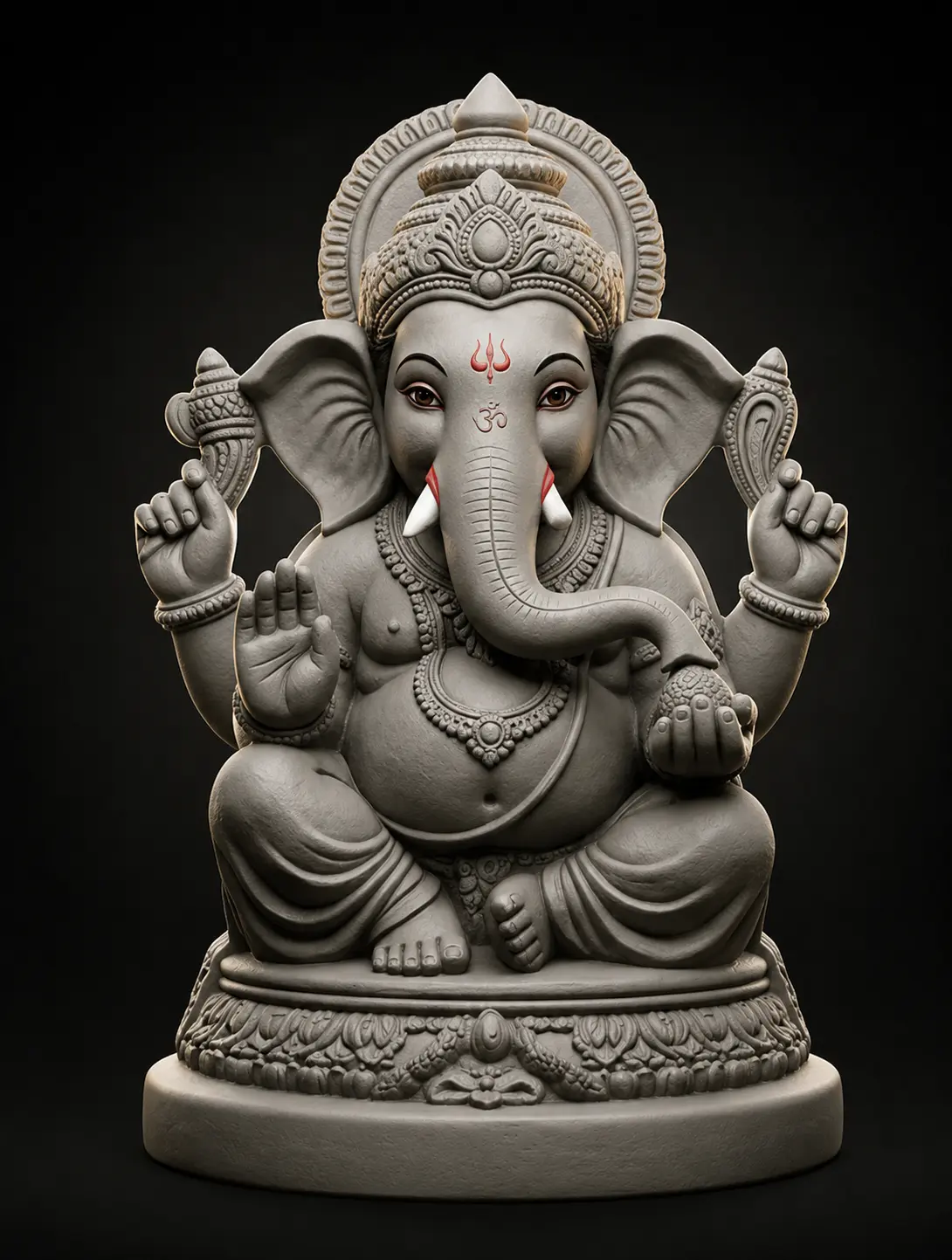
By choosing a Vamamukhi idol, you are intentionally inviting a stabilizing, peaceful frequency into your living space. This small physical detail ensures that the deity’s presence fosters harmony rather than demanding the intense spiritual rigor of a monastery.
Earth Over Plastic: The Bangalore Lake Connection
In Bengaluru, our festivals are inextricably linked to the health of our environment. The choice of material is a direct reflection of our respect for the cycle of creation. In the spiritual tradition, the idol is formed from the earth and must eventually return to it — a process known as visarjan.
For Water Immersion (Visarjan): If you intend to participate in water immersion, you must insist on Shadu Mati (natural clay). Unlike Plaster of Paris (PoP), which is a synthetic pollutant that can linger in our water bodies for years, natural clay dissolves harmoniously. Choosing Shadu Mati is an act of devotion to both the deity and the city’s local lakes, ensuring our rituals do not leave a scar on the land that sustains us.
For Permanent Worship: For those seeking a more enduring presence — perhaps an idol for a permanent home altar or as part of their “cultural lifestyle” decor — brass or carved wood are the preferred choices. These materials offer a tactile reality and a longevity that supports daily puja for years to come.
As modern devotees, we must remember that true worship cannot exist at the expense of nature. The “dissolving” of the clay is a beautiful metaphor for the temporary nature of the physical form and the eternal nature of the divine.
The Essential Duo: Don’t Forget the Mouse and the Modak
A Ganesha idol is only considered “complete” and ready for worship when it adheres to specific iconographic requirements. When scrutinizing product photos, look for the Mushaka (the mouse) and the modak (the sweet).
The Mushaka, Ganesha’s humble vehicle, represents the ability to control the wandering mind and the ego. The modak symbolizes the ultimate reward of spiritual wisdom and the “sweetness” of a life lived in accordance with dharma. Furthermore, always opt for a sitting posture (Lalitasana). In Vastu, a seated deity represents “grounding” — the idea that the energy of the Lord of Beginnings is firmly established and settled within your home, rather than being in a state of transit.
Size Is Deceptive: Navigating the Online Gallery
The digital landscape is one of distorted scales. A high-resolution macro shot can make a three-inch figurine look like a monumental masterpiece, leading to significant disappointment upon delivery.
Before you commit to a purchase, take a physical measurement of your home mandir, shelf, or pedestal. A sacred space should never feel crowded, nor should the idol be dwarfed by its surroundings; there must be a sense of “aesthetic resonance” in the proportions.
Pro tip: Never rely on visual intuition when shopping online. Always cross-reference the listed dimensions (height, width, and depth) with a measuring tape in your own space. Accurate due diligence is the only way to avoid the logistical heartache of an idol that does not fit its intended sanctuary.
Shipping Peace of Mind: The Transit Factor
Transporting a sacred object through the chaotic transit routes of Bangalore requires more than just bubble wrap; it requires a commitment to the idol’s sanctity. In Vastu, a damaged idol is referred to as khandit. A khandit idol is considered unfit for worship as the flow of energy is disrupted by the fracture.
Therefore, when ordering online, a “breakage guarantee” is not merely a financial safety net — it is a spiritual necessity. Ensure your seller provides:
- Rigid, multi-layered packaging specifically engineered for fragile spiritual artifacts.
- Explicit insurance that covers the safe arrival of the idol in its pristine state.
Ensuring the physical integrity of the idol from the artisan’s hands to your home is a vital part of maintaining the sanctity of the upcoming rituals.
The Ultimate Festival Shortcut: The Mane Mane Ganesha Kit
For those who wish to bypass the complexities of sourcing individual components, the Mane Mane Ganesha kit has emerged as a beloved local movement across Bengaluru. This kit is a masterclass in convenience and cultural authenticity, providing a curated, eco-friendly Shadu Mati idol — already Vamamukhi-aligned, already complete with the Mushaka and modak — delivered straight to your door. It bridges the gap between ancient devotion and the fast-paced life of our city, allowing you to focus on the spiritual essence of the festival rather than the stress of logistics.
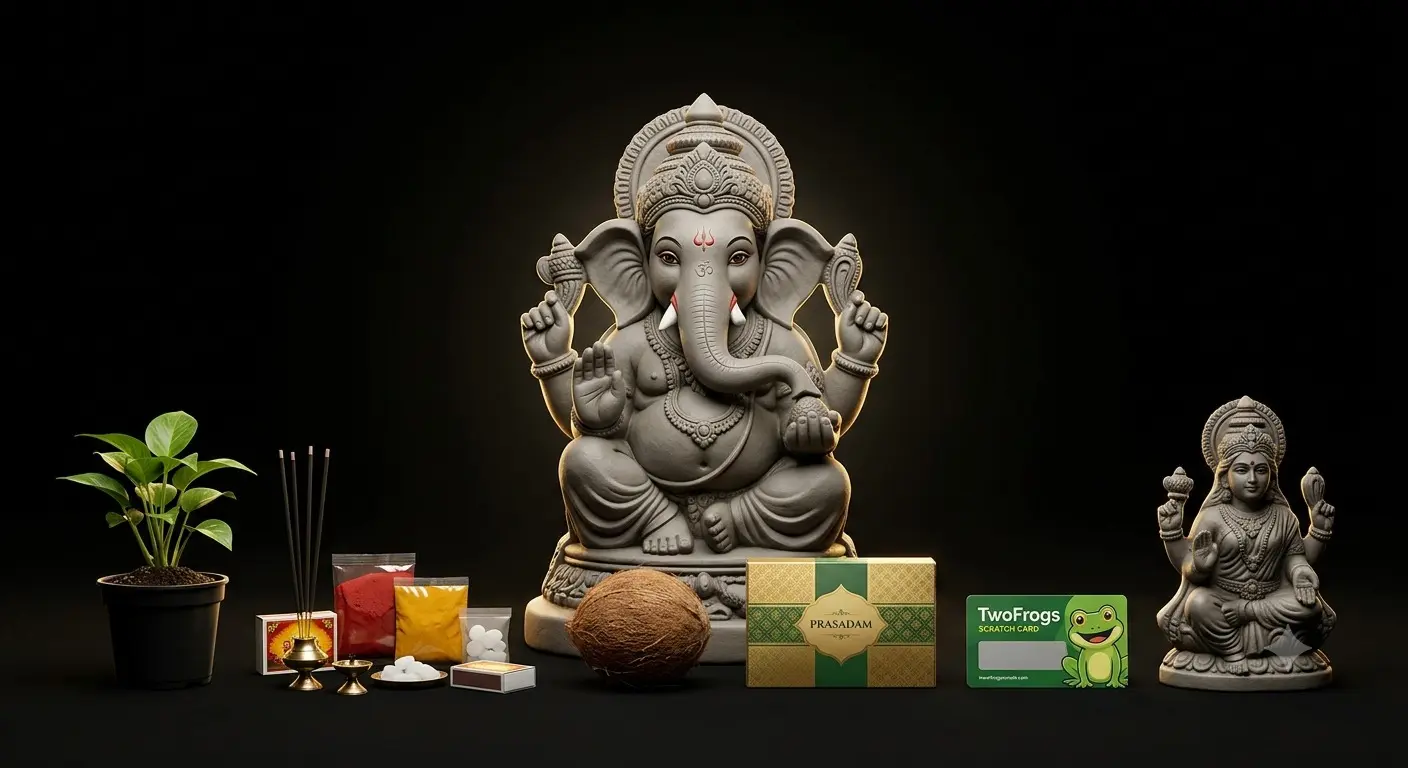
Register now to reserve your Mane Mane Ganesha kit and make this Ganesh Chaturthi truly unforgettable.
Frequently Asked Questions
Which direction should a Ganesha idol’s trunk face at home?
For home worship, choose a Vamamukhi idol — trunk curving to the left. It carries a cooling, nurturing Chandra (Moon) energy suited to daily domestic puja, unlike the right-facing Siddhivinayak form, which traditionally calls for stricter temple rituals.
Is Shadu Mati clay better than Plaster of Paris (PoP)?
Yes, if you plan to immerse the idol in water. Shadu Mati is natural clay that dissolves harmlessly, while PoP is synthetic and can pollute lakes for years. PoP idols are better reserved for eco-friendly bucket immersion or symbolic immersion rather than open water bodies.
What size Ganesha idol should I buy for a home mandir?
Measure your mandir, shelf, or pedestal — height, width, and depth — before ordering. Photos online are often shot to make idols look larger than they are, so always cross-check the listing’s stated dimensions against your own tape measure rather than the image.
What is included in the Mane Mane Ganesha kit?
The Mane Mane Ganesha kit is a curated, eco-friendly Ganesh Chaturthi box delivered to your home in Bangalore — built around a Vastu-compliant, natural-clay idol so you don’t have to source each component yourself.
Conclusion: A Celebration Beyond the Object
In our digital age, the act of being a conscious, informed buyer is a form of modern-day devotion. By looking beyond the screen and prioritizing Vamamukhi trunk alignment, ecological stewardship, and the physical sanctity of the idol, we ensure that our traditions remain vibrant and meaningful.
As we bring the Lord of Beginnings into our homes this year, how can our choices reflect both our deepest traditions and our commitment to the city we call home?
Kalyug Events
Planning an event in Karnataka?
We'd love to help. Get a free 30-minute consultation with no obligation.
Book Free ConsultationGanesh Chaturthi Idol Delivery Near You